Tyre Pressure Gauge – Everything You Need to Know
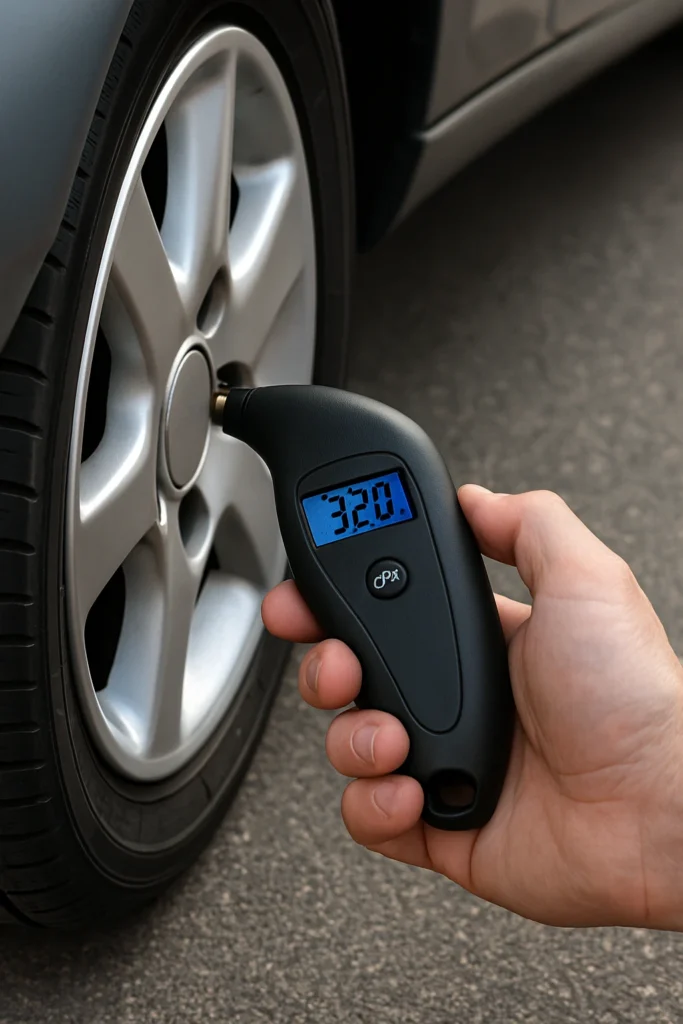
What Is a Tyre Pressure Gauge? A tyre pressure gauge is a small yet powerful tool used to measure the air pressure inside a vehicle’s tyres. While it might seem insignificant, this device plays a crucial role in ensuring your safety, comfort, and fuel efficiency on the road. Whether you’re driving a compact car, a rugged SUV, or a commercial van, maintaining the correct tyre pressure is non-negotiable. History and Evolution of Tyre Pressure Gauges The tyre pressure gauge is not a new phenomenon that has been in existence for decades. The first ones were crude stick gauges, analogous to a thermometer. They eventually became more advanced in the form of analogue dial gauges and recently, digital ones. The developments signify a growing concern about the safety and perfection in tyre care regarding automobiles. Why Tyre Pressure Matters When your tyres are either over or under-inflated, this will interfere with the vehicle’s handling, braking distance and fuel consumption. Under low pressure, a larger part of the tyre is in contact with the road, which leads to high friction and fuel consumption. In its turn, high pressure results in reduced grip and uneven wear. This is the reason why it is necessary to have your tyre pressure gauged frequently with a good gauge. Different Types of Tyre Pressure Gauges Tyre pressure gauges have also evolved with technology, and there are now several types and models of the device to match the preference of every driver and the type of vehicle. Stick (Pencil) Gauges These are the most primitive and basic ones. Stick gauges are portable and small in size, hence suitable for fast, on-spot checks. But they are not the most accurate and may be difficult to read. Dial (Analog) Gauges Analogue gauges display pressure values with the help of a needle and a dial. They are more accurate compared to stick gauges and are normally encased in rubber or metal to make them long-lasting. Others still have a pressure release valve. Digital Gauges The digital gauge is the most accurate and convenient. It has a backlit digital display that allows you to read pressure in dim light. They also could have additional features such as automatic shut-off or memory. TPMS (Tyre Pressure Monitoring System) TPMS is an onboard system fitted in most new cars, which displays continuous tyre pressure. Though convenient, it is nonetheless a good idea to check the manual gauge now and then just to be sure, since TPMS is not always accurate or timely. How to Use a Tyre Pressure Gauge Properly Using a tyre pressure gauge correctly ensures you get an accurate reading every time. Step-by-Step Guide Common Mistakes to Avoid When and How Often Should You Check Tyre Pressure? The health and safety of tyres lie in routine checks. Seasonal and Temperature Considerations The cold weather causes a decrease in tyre pressure and the opposite is true. Pressure may vary 1 -2 PSI per 10C. That is why it is particularly worth checking in between seasons. Recommended Frequency for Checks Benefits of Maintaining Correct Tyre Pressure Maintaining the correct tyre pressure provides a raft of advantages. Safety Advantages Correct tyre pressure gives a stronger grip, provides shorter braking distance and stable handling, which is extremely important in case of an emergency or when driving on a wet road. Fuel Efficiency and Cost Savings The under-inflated tyres further have high rolling resistance that consumes more fuel. Proper pressure can enhance mileage by up to 3 percent, and this saves money at the pump. Extending Tyre Life Even the wear of tyres translates into fewer replacements. Tyres that are over-inflated or under-inflated wear at an uneven rate and require more frequent replacement. What Is the Ideal Tyre Pressure for Most Vehicles? It depends on many factors, and there is no universal answer, but it is necessary to know your recommended PSI. Passenger Cars vs. SUVs vs. Commercial Vehicles How to Find Your Vehicle’s Recommended Pressure References to the recommended PSI levels by the manufacturer can be found on the inside of the driver door, your vehicle manual or the fuel tank flap. Top Tips for Choosing the Right Tyre Pressure Gauge This can make maintenance of tyres a breeze; one has to choose the right tool. Key Features to Look For Comparing Accuracy and Durability Gauge Type Accuracy Durability Cost Stick Low Medium Low Dial Medium High Medium Digital High Medium Medium-High How One Stop Mobile Tyres Can Help One Stop Mobile Tyres not only replace tyres, they provide a tyre care service at your doorstep. On-Site Tyre Pressure Checks No gauge or unsure of how to use one? Whenever you visit them (during any service), their specialists will ensure that your tyre pressure is correct and adjusted. Mobile Tyre Services for Busy Drivers One Stop Mobile Tyres offers pressure checks, partial and complete replacements and they save you time because they come to you, whether you are at home, in the office or on the side of the road. Stay Safe with the Right Tyre Pressure Knowledge A tyre pressure gauge may be small in size, yet it makes a huge difference to your safety and savings on driving. Knowing the types, the way to use them and their optimal pressure levels will help you to avoid blowouts, increase mileage and tyre life. One Stop Mobile Tyres makes it easier to be ready on the road, all one has to do is schedule an appointment and they will take care of the rest.