
The Quick Answer
A tyre can usually be repaired if the damage is a small puncture (6mm or less) in the central tread area, the tyre has no other damage, and it hasn't already been repaired nearby. It needs replacingif the damage is in the sidewall or shoulder, larger than 6mm, if there's a bulge or crack, or if the tread is worn below 3mm.
If you're not confident checking it yourself, our technicians can inspect your tyre at your home, work or roadside location and give you an honest answer — repair where it's safe, replace where it isn't. Call 07759 708 646 any time, day or night.
A puncture is one of those problems that always seems to happen at the worst possible moment — on the school run, on the way to work, or on a motorway hard shoulder. The first question on everyone's mind is the same: do I need a new tyre, or can this one be fixed?The honest answer depends on exactly where the damage is, how big it is, and what condition the rest of the tyre is in. Here's how to check it properly.
1. Where Is the Damage on the Tyre?
This is the single biggest factor. A tyre is made up of three zones, and only one of them can safely be repaired:
| Zone | Can it be repaired? |
|---|---|
| Central tread (middle ~75% of the tyre width) | Usually, yes |
| Shoulder (where tread meets sidewall) | No |
| Sidewall | No |
The sidewall flexes constantly as you drive, so any repair there is at genuine risk of failing without warning. This is why professional repairs — including ours — always follow the British Standard BS AU 159, which restricts repairs to the central tread area only.
2. How Big Is the Puncture?
Under BS AU 159, a puncture can only be repaired if the damage is 6mm in diameter or smaller — roughly the width of a large nail or screw. A wider puncture, a cut, or a split in the tread means the internal structure of the tyre is too compromised to repair safely, and it will need replacing.
3. Check the Tread Depth
Even a perfectly repairable puncture doesn't make sense to fix if the tyre is nearly worn out anyway. Here's the quick way to check:
- 1.Insert a 20p coin into the main tread grooves, at a few points across the tyre.
- 2.If the outer band of the coin is still visible, your tread is below the legal limit of 1.6mm and the tyre must be replaced regardless of the puncture.
- 3.Most professionals, us included, recommend replacing at 3mm, since wet-weather braking distances increase sharply once tread drops below that.
4. Seven Signs Your Tyre Needs Replacing, Not Repairing
A bulge or blister on the sidewall
Means the internal casing is damaged. This can burst without warning and can never be repaired.
A cut, split or gash in the tread or sidewall
Rather than a clean puncture from a nail or screw, wider damage compromises the whole structure.
Damage in the shoulder or sidewall area
Outside the repairable central tread zone, regardless of how small it looks.
Tread wear indicators showing
The small raised bars built into the grooves flush with the tread mean you're at the legal limit.
A second puncture within 16cm of an existing repair
Repairs too close together weaken the tyre further and are not considered safe.
Exposed steel cords or fabric plies
If you can see the tyre's internal structure through the damage, it is beyond repair.
The tyre is over 6-10 years old
Rubber degrades with age even with good tread remaining — check the date code on the sidewall.
5. A 5-Minute DIY Check You Can Do Right Now
- Park on level ground and apply the handbrake.
- Walk around the tyre and look for anything embedded — nails, screws or stones.
- Note exactly where the damage is: central tread, shoulder, or sidewall.
- Check for bulges, cracks or cuts anywhere on the tyre, not just where you found the damage.
- Run the 20p coin test at three or four points around the tread.
- If in doubt, don't drive on it — call a mobile technician to inspect it in place.
If It Can Be Repaired
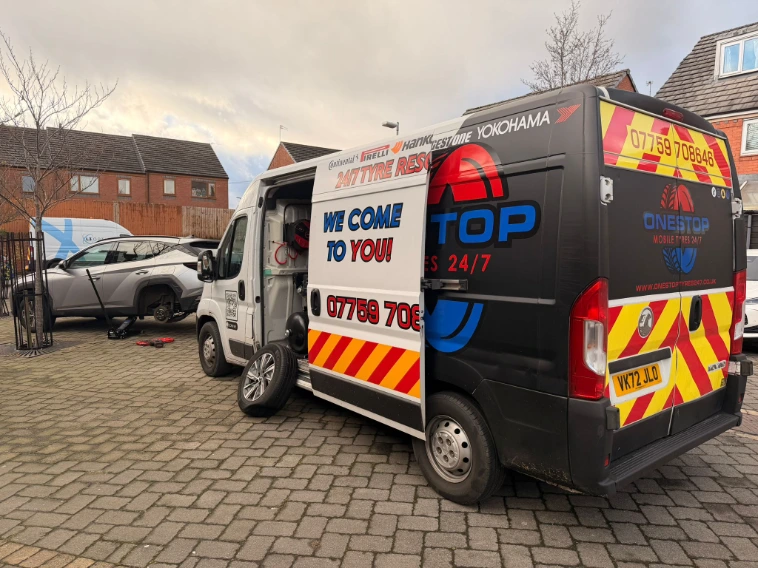
A professional puncture repair, carried out to BS AU 159 standard, involves removing the tyre from the wheel completely to inspect the inside for hidden damage, then fitting a combination plug-and-patch that seals the injury from both outside and inside the tyre — a proper repair, not a quick plug from outside. Our mobile emergency puncture repair service carries out exactly this kind of repair at your home, workplace or the roadside, with a full TPMS check afterwards so your dashboard warning light clears once the job is done.
If It Needs Replacing
If your tyre falls into any of the "needs replacing" categories above, the good news is you don't need to go anywhere to sort it. Our mobile tyre fitting service brings a fully equipped van to your home, workplace or roadside location, carrying premium, mid-range and budget tyres from leading manufacturers, so we can supply and fit a matching replacement on the spot — no tow truck, no waiting room, and no need to drive on a tyre that isn't safe.
Not sure which one you need?
Send us a photo on WhatsApp or describe what you can see over the phone — we'll tell you honestly whether it's a repair or a replacement job, and get a technician to you either way.