The Quick Answer
Run-flat tyres have reinforced sidewalls that let you keep driving — at a reduced speed, for a limited distance — after a puncture, so the car needs no spare wheel. Normal tyres are lighter, cheaper and more widely stocked, but a puncture usually means stopping straight away. You canswitch from run-flat to normal tyres on most cars, but all four tyres must match, and you should check what safety net (spare wheel, breakdown cover, or a mobile fitter) replaces the run-flat's "keep driving" ability first.
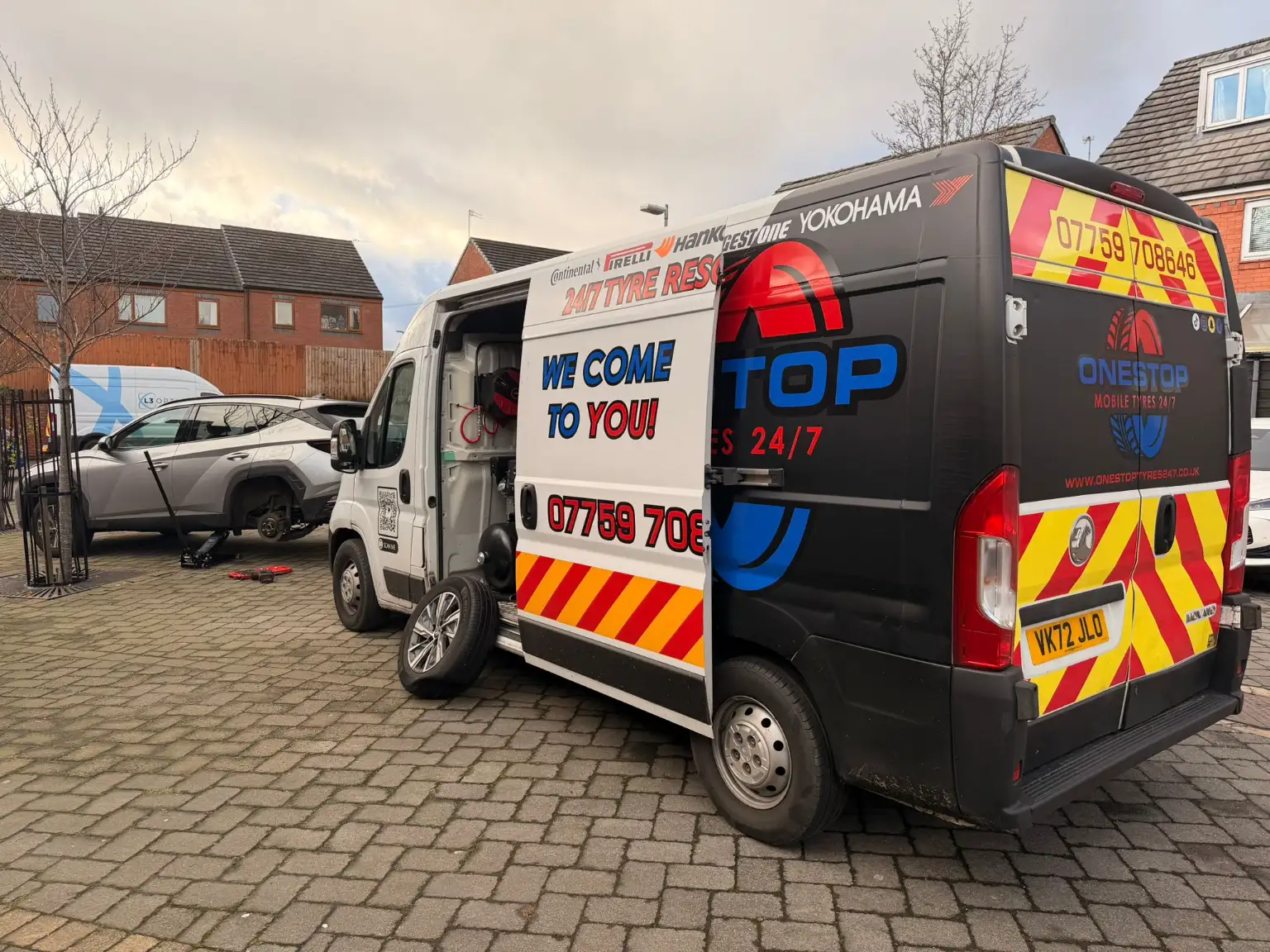
Not sure which type your car has, or want a straight answer on cost before you commit? Call 07759 708 646 — we'll check your sidewalls, confirm the right option, and fit at your home, work or roadside wherever you need us.
We get this question most often from drivers replacing tyres on BMW, Mini, Mercedes and some Audi models, where run-flats are common as standard fitment. The confusion is understandable — the two types look almost identical from the outside, but they behave very differently the moment something goes wrong. Here's what actually matters when you're choosing a replacement.
What's Actually Different About a Run-Flat Tyre?
A run-flat tyre has a much stiffer, reinforced sidewall than a normal tyre. When air pressure drops to zero, that reinforced sidewall supports the weight of the car instead of collapsing, so you can keep driving — usually up to around 50 miles at a maximum of 50mph, though the exact limit depends on the brand and model. A normal tyre has no such reinforcement, so a full puncture means the tyre collapses onto the wheel rim almost immediately, and driving on it any distance damages the tyre and often the wheel too.
Because run-flats provide their own built-in "get you home" capability, cars fitted with them from the factory almost always skip the spare wheel entirely to save weight and boot space. That single design choice is the main reason switching type later needs a bit of thought.
Run-Flat vs Normal: Side by Side
| Factor | Run-Flat | Normal |
|---|---|---|
| After a full puncture | Drive on, reduced speed, limited distance | Stop as soon as safely possible |
| Spare wheel needed | Usually not fitted | Often included, or a repair kit |
| Ride comfort | Firmer, due to stiffer sidewall | Generally softer |
| Price & stock availability | Higher cost, fewer sizes in stock | Wider choice, usually cheaper |
| Repairable after a puncture? | Almost never — sidewall damage is common | Often yes, if the puncture qualifies |
On that last point — if you're not sure whether your current tyre can be saved with a repair rather than a full replacement, our guide to whether a tyre can be repaired or needs replacing covers exactly that.
Can You Switch From Run-Flat to Normal Tyres?
On the majority of cars, yes — but there are three things to sort out before you do:
- Replace the full set, not just one or two.Mixing run-flat and normal tyres on the same car — or even the same axle — creates uneven handling and is not something we'll do for safety reasons.
- Sort out your puncture safety net.Without run-flats, a flat tyre means stopping. Consider a space-saver spare if there's room for one, good breakdown cover, or simply knowing a mobile tyre fitter you can call — which is exactly the gap our mobile tyre fitting service is built to fill.
- Check your TPMS setup. Some systems are calibrated around run-flat sidewall behaviour; we include a check with every fitting so your warning light stays accurate either way.
We talk every customer through this trade-off before fitting — most drivers who switch are simply after cheaper, more widely available tyres and a softer ride, and are happy to rely on a mobile fitter instead of a run-flat's built-in buffer.
What Does It Cost to Replace Run-Flat Tyres?
Run-flats typically cost more than a normal tyre of the same brand and size, mainly because of the reinforced sidewall construction and lower demand meaning less stock is held locally. If budget is the main driver behind switching, our cheap mobile tyre fitting service covers budget, mid-range and premium options at competitive prices — we'll give you an honest, upfront quote for both a like-for-like run-flat replacement and a normal-tyre alternative, so you can decide with the full picture in front of you.
Not sure which tyres your car needs?
Send us your reg or a photo of the tyre sidewall and we'll confirm what you currently have, talk through your options, and give you a straight quote — no obligation.